
· Dana Whitfield
How to Use a Weaving Loom, Step by Step
Most beginners get stuck for the same reason: the box doesn't come with a real walkthrough, just a diagram. A frame loom like the ones we sell at LoomCraft is genuinely simple once you've done it once, hand-woven, no motor, no moving heddle mechanism to learn. This guide covers the five moves in order, in the same sequence Dana uses when she test-weaves a new weaving loom kit before it ships.
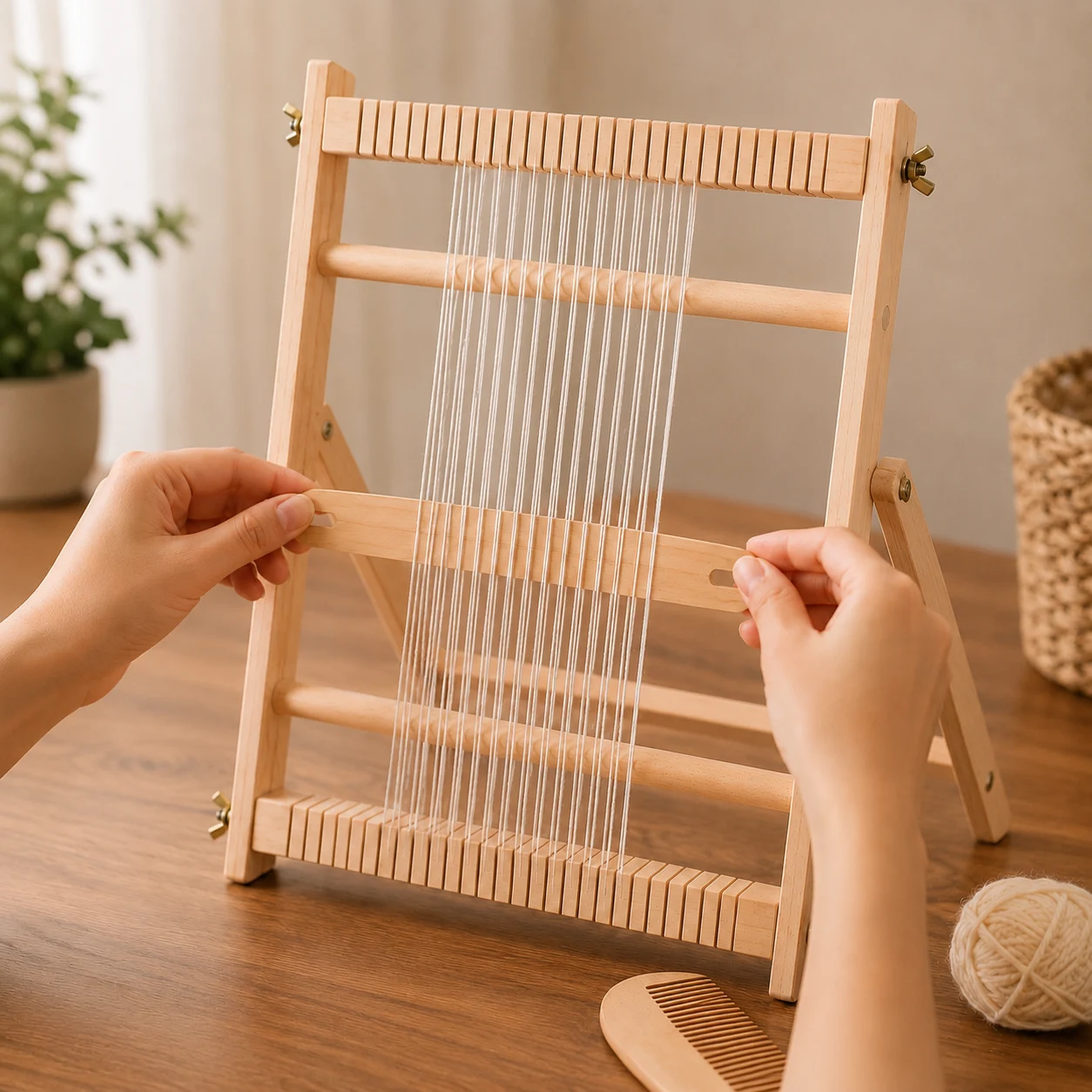
What's actually in your box
The Small and Medium kits include the frame, one comb, two flat forked shuttles, and the 12-color yarn set. The Large kit adds a third shuttle and a notched rod (useful for closer warp spacing on wider pieces), on top of the same 12 colors. See the full weaving loom kit breakdown for what ships in each size. None of this requires assembly tools beyond your hands — the wingnuts are hand-tightened by design.
Step 1: Assemble the frame
Lay the two side rails flat, insert the dowel pegs into the holes that match the height you want to weave at (lower for a dense, close weave; higher if you're planning a taller tapestry), and hand-tighten the wingnuts at all four corners. You're not drilling or gluing anything — that's the point of a frame loom over a built-in-shop model. If a peg feels loose after your first session, it's almost always because a wingnut needs another quarter turn, not a defect.
Step 2: Warp the loom
Tie your warp thread to the first notch, then carry it straight down to the matching notch on the bottom bar, back up to the next notch, and repeat. The notches exist so every warp thread lands at a consistent, even spacing without you measuring each one by eye. Aim for tension that feels like a taut guitar string, not a rubber band. Too loose and your rows will bunch; too tight and the wooden bars can bow slightly under strain. This is the step first-timers rush, and it's the one that determines whether the rest of the project goes smoothly.
Step 3: Weave with the shuttle
This under-over-under-over motion is the entire process of hand weaving — no lever does it for you, which is exactly what keeps a frame loom this affordable and this portable. Go slowly for your first ten rows. Once your hands learn the alternating rhythm, most weavers pick up real speed within a single sitting.
A quick look at the under-over motion in practice.
Step 4: Beat the weft with the comb
This is the step that separates a finished-looking piece from one that looks unraveled. After every couple of passes with the shuttle, take the comb and pull the weft firmly toward you, packing it against the previous rows. Beat with even pressure across the full width, not just the center, or you'll end up with a piece that's denser in the middle than at the edges.
Step 5: Finish and remove your piece
Once you've cut the warp free from the notched bars, your weaving is done, and your loom is immediately ready to warp again for the next project. If your first piece looks uneven, that's normal; check our beginner's guide for the sizing and project choices that make the first few attempts easier.
Why the comb matters more than the loom size
New weavers often assume a bigger loom or a fancier mechanism produces better fabric. In practice, beating technique matters more than either. A rigid heddle loom (a different, pricier category of loom with a moving heddle that lifts alternating threads for you) automates part of the shed-opening process, but it still can't beat the weft for you — that's always a hand motion, on any loom. Learning to beat evenly on a simple frame loom is transferable to every other hand-weaving tool you'll ever pick up.
Knitters surveyed across 39 countries who reported that more frequent hand-craft sessions correlated with feeling calmer and happier
— Riley, Corkhill & Morris, British Journal of Occupational Therapy, 2013
Knitting-forum posts analyzed in a study finding regular needlecraft supports stress relief, identity, and daily structure
— University of Gothenburg, Journal of Occupational Science, 2024
Americans who knit or crochet, according to the yarn industry's own trade association
— Craft Yarn Council, 2024
Frequently asked
Do I need the notched rod that comes with the Large size?
Only if you want closer warp spacing than the standard notches allow. The Small and Medium kits weave beautifully without it; it's an extra option, not a requirement.
What if my rows look uneven after beating?
Uneven beating pressure across the width is the most common cause. Practice pulling the comb toward you with the same pressure at both edges as in the center, and it evens out within the first project.
Can I use this same process on any weaving loom kit?
Yes. Assembly hardware differs slightly by brand, but warping notched bars, weaving with a shuttle, and beating with a comb are universal to frame and tapestry looms generally.

Dana Whitfield · Weaving Editor, LoomCraft
Dana writes LoomCraft's weaving guides: warping, weaving and finishing on a frame loom, from a first coaster to a wall hanging.
Reviewed and updated July 5, 2026. Read more in our frame loom guide.
Related reading: Weaving loom for beginners · Best weaving loom, compared · Tapestry weaving basics · Reviews · All guides
Ready to weave on arrival: frame, comb, shuttles, and 12 colors of yarn included.